
SeedVerse: Exploring the World of AI World Models
Understanding how artificial intelligence learns, predicts, and simulates the world.
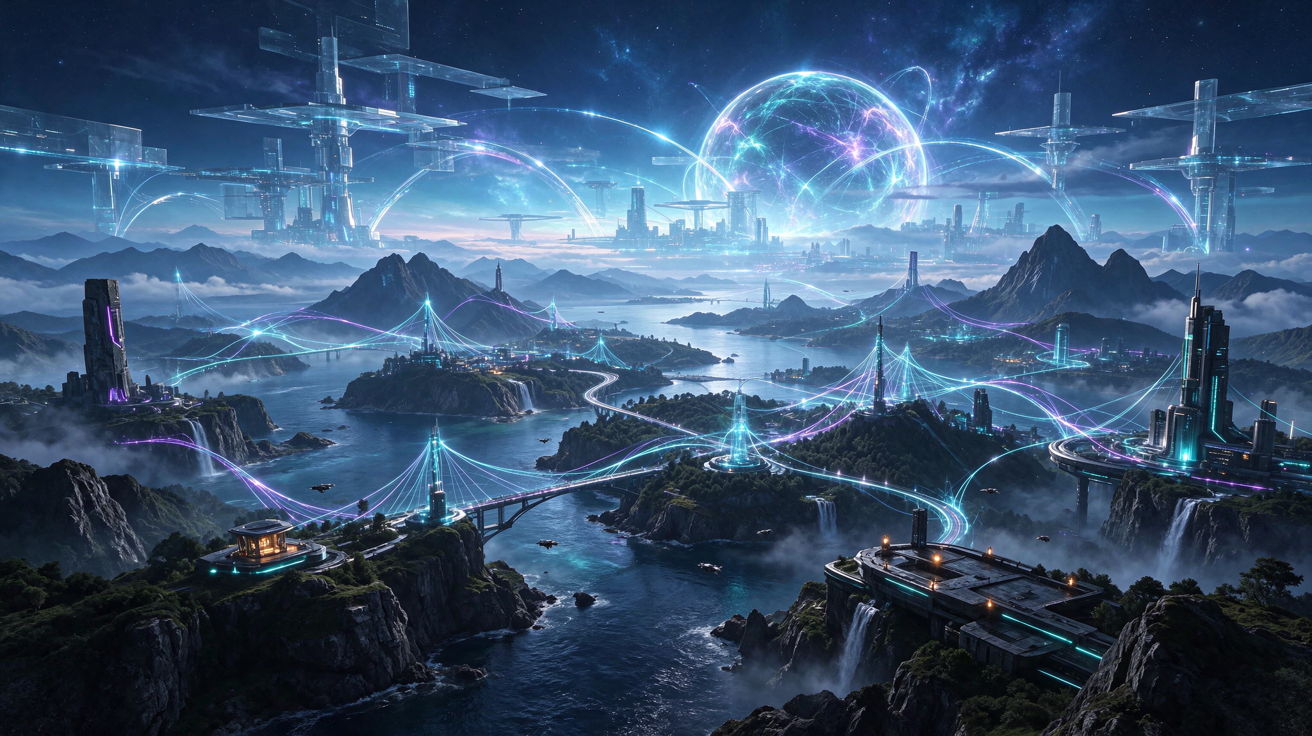
Artificial intelligence is moving beyond systems that simply recognize images, generate text, or create short video clips. A growing area of research is focused on a deeper question: can an AI system learn how the world works, anticipate how it may change, and predict the consequences of actions within it?
This is the central idea behind AI world models.
World models are designed to represent environments and their dynamics. Depending on the approach, they may predict future visual observations, reconstruct three-dimensional spaces, simulate physical interactions, or learn compact representations that help an agent plan its next action.
The field brings together ideas from generative AI, computer vision, robotics, reinforcement learning, spatial intelligence, and physical simulation. Although these research directions are related, they do not all solve the same problem.
SeedVerse explores this evolving field: the concepts, technologies, research projects, applications, and open challenges behind AI systems that aim to understand and model the world.
What Are AI World Models?
An AI world model is a learned representation of an environment and the processes that govern how it changes.
Rather than responding only to the current input, a world model attempts to capture relationships between objects, events, actions, and future states. It can use this internal representation to estimate what might happen next or how an environment may respond to a particular action.
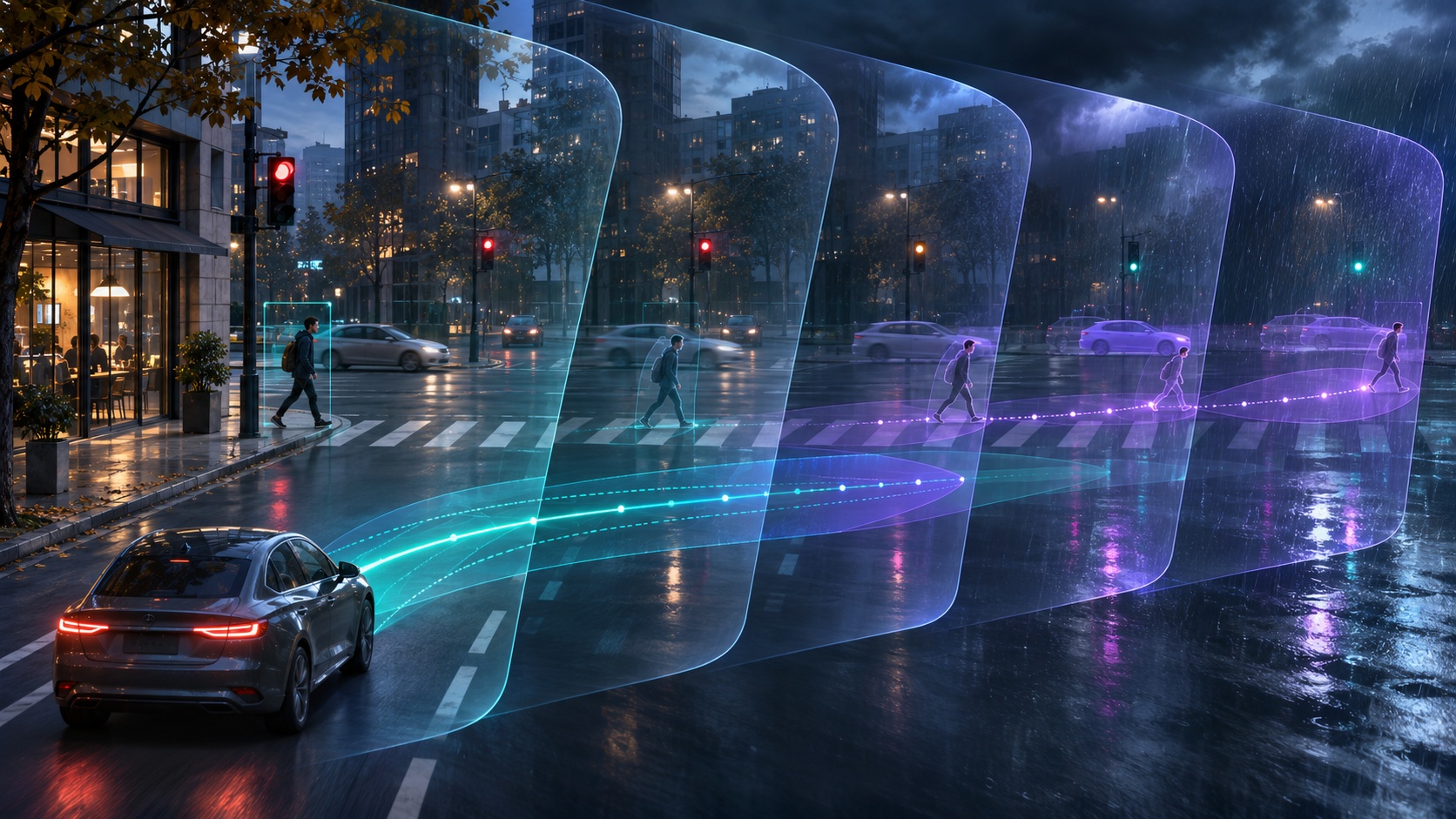
For example, an autonomous driving system must do more than identify a pedestrian in an image. It needs to estimate the pedestrian's movement, understand the surrounding road layout, anticipate possible interactions with nearby vehicles, and reason about how different driving decisions could affect the situation.
A world model can support this process by learning patterns of environmental change from visual observations, sensor data, interaction records, or simulated experience.
Beyond Visual Generation
World models are sometimes confused with image and video generation models because both can produce realistic visual content. However, visual quality alone does not establish that a system has learned how an environment behaves.
A video generator may create a convincing sequence of a ball rolling across a table. A more capable world model would also need to represent how the ball's movement relates to gravity, friction, contact with other objects, and changes caused by external actions.
The distinction is not always absolute. Some world models use video generation as their main representation of future states, while others predict compressed features or structured 3D information instead of producing complete images.
The important question is not simply whether a model can generate a realistic scene, but whether its predictions remain coherent and useful when the environment changes or an agent takes action.
Why Are World Models Important?
Many intelligent tasks require more than recognizing the present. They require anticipating possible futures.
World models are being investigated because they may help AI systems:
- Predict how objects and environments will change over time.
- Estimate the consequences of different actions.
- Plan tasks before acting in the physical world.
- Generate synthetic environments and training experiences.
- Test scenarios that are difficult, expensive, or unsafe to reproduce in reality.
- Build more capable robots, autonomous systems, and interactive agents.
These capabilities are especially relevant when an AI system must operate in an environment that is dynamic, uncertain, and only partially observable.
How Do World Models Work?
There is no single architecture used by every world model. Different systems combine perception, representation learning, prediction, memory, and action conditioning in different ways.
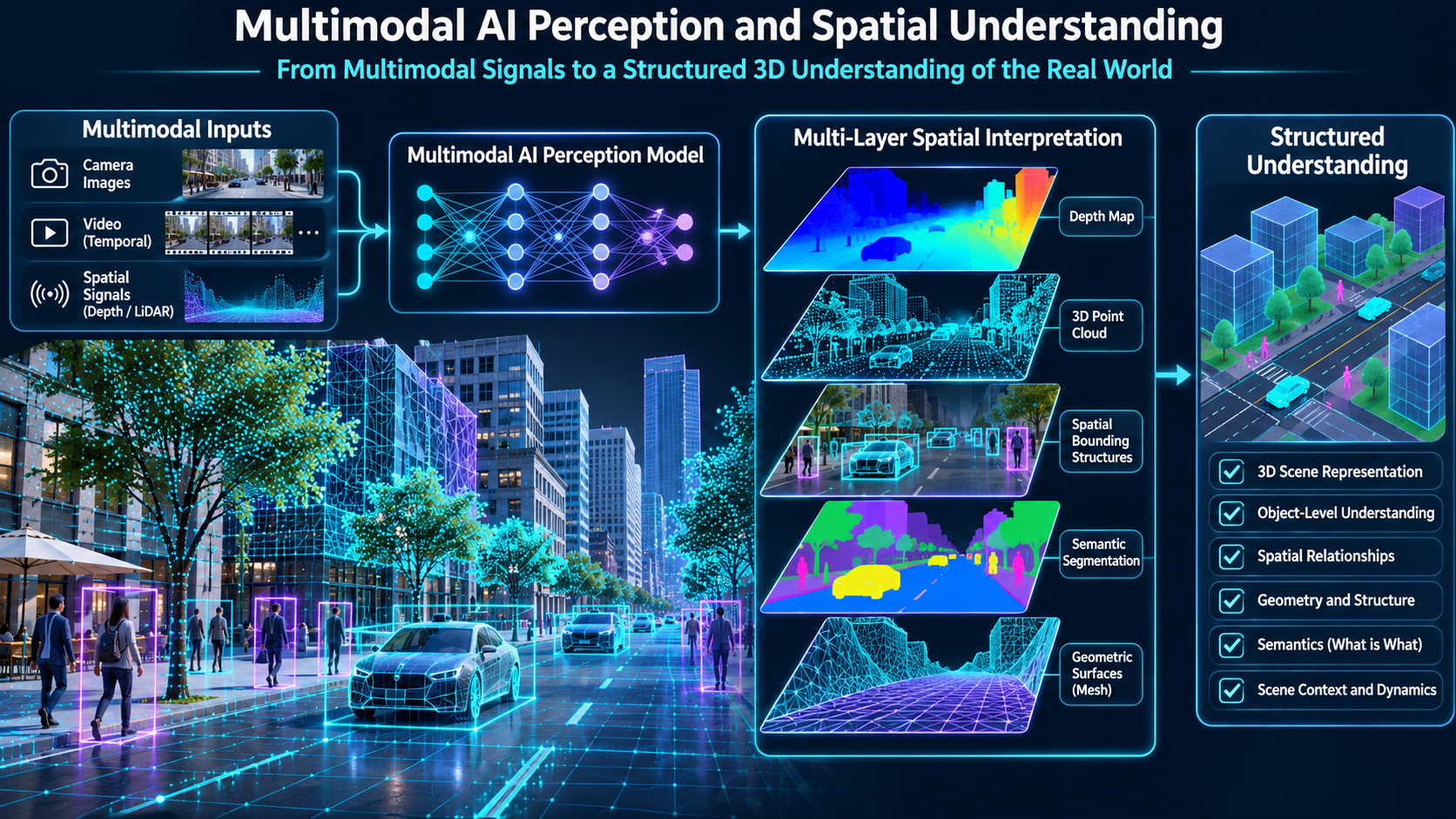
A simplified world-model pipeline can be understood through several connected stages.
Multimodal Perception
A world model first needs information about its environment.
Depending on the system, inputs may include:
- Images and video frames.
- Text descriptions and instructions.
- Depth maps and 3D point clouds.
- Camera movement and spatial information.
- Robot actions and sensor observations.
- Audio and other environmental signals.
Multimodal perception allows a model to combine different sources of information rather than treating every observation as an isolated image.
Spatial Representation
Understanding a scene requires more than identifying individual objects. A model may also need to represent their positions, dimensions, orientation, distance, and relationships.
For example, recognizing a chair is different from understanding where it is located relative to a table, whether a robot can reach it, or how it would move if pushed.
Spatial representations can take many forms, including:
- 2D and 3D feature maps.
- Depth and geometric representations.
- Point clouds and 3D Gaussian splats.
- Mesh-based environments.
- Object-centric representations.
- Latent spatial embeddings.
Different representations offer different trade-offs between visual detail, computational cost, geometric precision, and ease of interaction.
World State Modeling
The information gathered from perception is transformed into an internal representation of the environment.
This representation may describe objects, their properties, their relationships, and the current state of the scene.
Some models explicitly represent objects and geometry. Others use latent spaces, where environmental information is compressed into learned features that do not necessarily correspond to human-readable objects.
The purpose is to retain the information needed for prediction, planning, or simulation.
Temporal Dynamics
A world is not static. Objects move, people interact, vehicles change direction, and environmental conditions evolve.
World models therefore need to learn how states change over time.
Temporal modeling helps capture patterns such as:
- The movement of people and vehicles.
- Changes in object positions and orientations.
- Interactions between objects.
- The progression of physical events.
- The relationship between earlier observations and later outcomes.
A model that produces individually realistic frames but loses consistency between them may struggle to represent a coherent evolving environment.
Future State Prediction
Once a model has learned a representation of the current environment and its dynamics, it can attempt to predict future states.
These predictions may be represented as future video frames, latent feature sequences, spatial structures, or other forms of simulated observations.
A system might estimate how a vehicle approaches an intersection, how an object moves after being pushed, or how a virtual environment changes as a camera moves through it.
Prediction quality depends on the model's ability to preserve relevant information across time and handle situations that differ from its training examples.
Action-Conditioned Modeling
One of the most important directions in world-model research is action conditioning.
Instead of predicting what happens next based only on previous observations, an action-conditioned model also considers a possible action.
For example:
- What happens if a robot moves its arm toward an object?
- How does traffic respond if an autonomous vehicle changes lanes?
- What happens when a virtual character opens a door?
- How does an object behave when pushed from a different direction?
This allows a model to compare possible outcomes and support planning.
Major Types of AI World Models
World models are not one single category of technology. They can be grouped by the kinds of information they represent, the outputs they produce, and the tasks they are designed to support.
These categories overlap, and a single research system may combine several approaches.
Generative World Models
Generative world models produce future observations or entire environments.
Some generate video sequences that show how a scene might evolve. Others create virtual environments from text, images, or other visual inputs.
Their research value comes from the ability to construct possible worlds and generate observations that can be explored, evaluated, or used as synthetic data.
However, generating a visually convincing environment does not automatically mean that the model has accurate physical dynamics or reliable long-term behavior.
Predictive and Latent World Models
Predictive world models focus on estimating future states rather than necessarily rendering every future frame.
Many use latent representations: compressed internal features that capture information relevant to prediction and decision-making.
This approach can reduce the cost of modeling visual details that are not important for a particular task.
Research based on joint-embedding predictive architectures, including JEPA-style approaches, investigates how models can learn useful representations by predicting relationships between observations in feature space.
Spatial and 3D World Models
Spatial world models emphasize the structure and geometry of environments.
They may reconstruct or generate 3D scenes using representations such as meshes, point clouds, or 3D Gaussian splats.
These systems are relevant to scene reconstruction, spatial reasoning, virtual production, simulation, and robotics.
A 3D representation can preserve camera-dependent geometry and spatial relationships, but it does not necessarily provide a complete model of physical behavior. Geometry and dynamics are related but distinct problems.
Interactive World Models
Interactive world models respond to actions or changes introduced during a simulation.
Instead of producing a fixed sequence, they attempt to maintain an evolving environment as an agent or user moves, changes the camera, or modifies the scene.
Important research questions include how to preserve object identity, maintain spatial consistency, respond to new instructions, and support longer interactions.
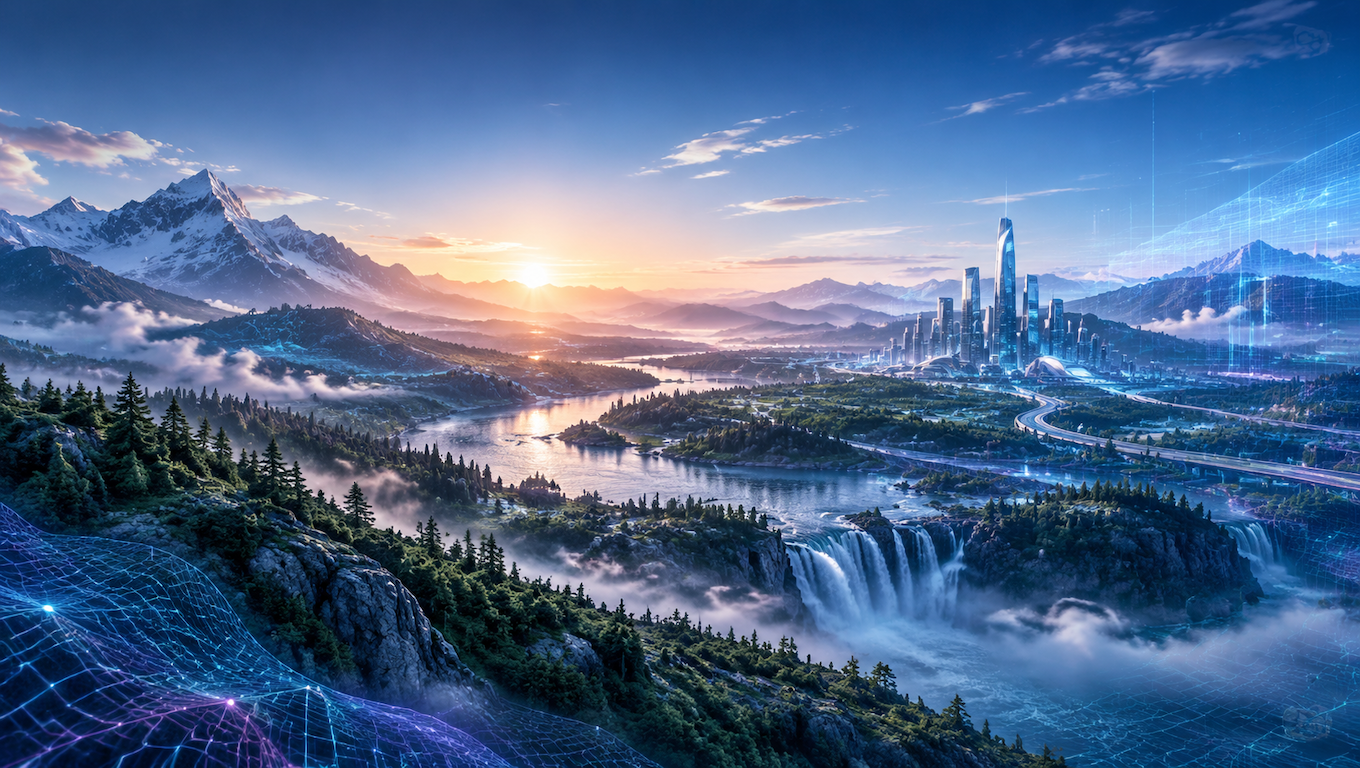
Physical World Models
Physical world models focus on how objects and environments behave under physical conditions.
Relevant factors may include:
- Gravity and inertia.
- Collision and contact.
- Friction and sliding.
- Deformation and material properties.
- Force and movement.
- Object manipulation and physical constraints.
These capabilities are particularly important for robotics, autonomous systems, and other forms of physical AI.
Model-Based Reinforcement Learning
In model-based reinforcement learning, an agent learns or uses a model of its environment to evaluate possible actions.
The model can predict how the environment may respond, allowing the agent to plan within an internal simulation before acting in the real environment.
This research direction has a long history in reinforcement learning and remains an important foundation for modern world-model research.
Leading AI World Models and Research Projects
Research into world models is developing across several different technical directions. Some projects focus on interactive visual environments, others on spatial reconstruction, latent prediction, physical AI, or action-conditioned simulation.
The following examples illustrate the diversity of the field. They should not be treated as directly interchangeable products: their objectives, architectures, availability, and levels of maturity differ.
Google DeepMind
Genie
Generative interactive environments
Environments generated from visual or textual inputs that can respond to interaction
Google DeepMind (opens in a new tab)
Google DeepMind's Genie research explores models that can generate interactive environments from visual or textual inputs.
The Genie line illustrates a generative approach to world modeling, where a model creates an environment that can respond to navigation and other forms of interaction.
Its successive research developments investigate higher-quality interactive environments, improved temporal consistency, and more complex scene dynamics.
NVIDIA
Cosmos
World foundation models for physical AI
Multimodal understanding, synthetic data, world simulation, and action-related modeling
NVIDIA Cosmos (opens in a new tab)
NVIDIA Cosmos is a family of world foundation models developed for physical AI.
Its research direction connects multimodal understanding, synthetic data generation, world simulation, and action-related modeling.
The broader goal is to provide foundations for robotics, autonomous vehicles, and industrial physical-AI systems, where models need to understand environments and predict how they may change.
NVIDIA has also released model resources, code, and datasets to support research and development.
World Labs
Marble and Atlas
Spatial intelligence and 3D environments
Navigable 3D worlds and multimodal spatial representations
World Labs (opens in a new tab)
World Labs focuses on spatial intelligence and models that can represent and reconstruct three-dimensional environments.
Its Marble work explores the generation of navigable 3D worlds from inputs such as text, images, and video.
World Labs has also introduced research into multimodal spatial representations, connecting text, images, video, and 3D information in a shared spatial context.
This direction highlights the importance of spatial representation as a foundation for scene understanding, reconstruction, and future simulation.
Meta
V-JEPA
Predictive feature-based world modeling
Representations learned from video without reconstructing every pixel
Meta AI Research (opens in a new tab)
Meta's V-JEPA research represents a predictive, feature-based approach to world modeling.
Rather than focusing exclusively on generating realistic pixels, JEPA-style systems learn representations of the world and predict how those representations may change.
This approach is relevant to physical understanding and planning because it investigates whether useful environmental knowledge can be learned without reconstructing every visual detail.
V-JEPA research is part of a broader effort to develop systems that learn from video and other observations to understand objects, movement, and environmental dynamics.
Tencent
HY-World
Multimodal 3D world generation
Meshes, 3D Gaussian splats, navigation, and stereo reconstruction
Tencent Hunyuan (opens in a new tab)
Tencent's HY-World research focuses on multimodal 3D world generation and reconstruction.
HY-World 2.0 accepts inputs including text, single-view images, multi-view images, and video, and aims to produce 3D world representations such as meshes and 3D Gaussian splats.
Its workflow connects scene generation, navigation, stereo reconstruction, and 3D representation.
This makes it relevant to spatial content creation, environment reconstruction, and integration with 3D development workflows.
Runway
General World Models
Generative video toward action-aware simulation
Generated environments, virtual characters, and robotics
Runway Research (opens in a new tab)
Runway's General World Models research explores several directions, including generated environments, virtual characters, and robotics.
The broader research goal is to connect generative video systems with environments that can respond to interaction and support embodied tasks.
This illustrates how video generation research may evolve toward more structured and action-aware simulation, although visual generation, interactive simulation, and reliable physical control remain distinct capabilities.
Wayve
GAIA
World modeling for autonomous driving
Controllable generation and prediction for driving scenarios
Wayve's GAIA research focuses on world modeling for autonomous driving.
Driving environments contain complex interactions between vehicles, pedestrians, road layouts, weather, and other dynamic factors.
A useful driving world model must represent not only what a scene looks like, but also how it may evolve under different driving decisions.
GAIA research investigates controllable generation and prediction for driving scenarios, helping researchers study alternative situations and evaluate autonomous driving systems.
Dreamer
Dreamer
Model-based reinforcement learning
Compact dynamics models and learning from imagined experience
Dreamer project (opens in a new tab)
Dreamer is a model-based reinforcement learning research family.
Its central idea is to learn a compact model of environmental dynamics and use imagined experience to improve decision-making.
Rather than requiring an agent to learn only through direct interaction with the real environment, Dreamer-style approaches allow it to plan and learn within a learned model.
This makes Dreamer an important connection between world models and reinforcement learning.
Other Emerging Research Directions
The wider ecosystem also includes projects exploring real-time interactive environments, robot manipulation, autonomous driving simulation, and action-conditioned video prediction.
Examples include Odyssey's interactive world-model research, Ant Group's LingBot-World, Skywork's Matrix-Game, Decart's Oasis, and Microsoft's WHAM research.
These projects demonstrate that the field is not moving toward a single architecture. Instead, different teams are investigating different combinations of generation, memory, geometry, prediction, and action control.
World Models vs. Traditional Generative AI
World models and traditional generative AI share many underlying techniques, but their objectives are not identical.
Traditional generative systems are often designed to produce a particular output, such as an image, video, or 3D asset. World models place greater emphasis on representing how an environment behaves and how it may change over time.
| Technology | Primary objective | Typical output |
|---|---|---|
| AI image generation | Create visual content | Images |
| AI video generation | Generate moving visual sequences | Video clips |
| 3D generation | Create spatial assets and scenes | Meshes, point clouds, 3D Gaussian splats |
| Predictive world models | Estimate future environmental states | Latent features, predictions |
| Interactive world models | Simulate environments that respond to actions | Dynamic visual or spatial environments |
| Physical world models | Represent and predict physical interactions | Simulated states, action-conditioned predictions |
These categories can overlap. A video generation model may become part of a world-model system, and a 3D generation model may provide the spatial foundation for a larger simulation. Video models and image models cover traditional generation.
The distinction lies in what the system is designed and evaluated to do.
A model that generates a realistic video of a moving car demonstrates visual generation. A model that can predict how the car's position, surrounding traffic, and environment change in response to different driving actions is addressing a broader world-modeling problem.
Real-World Applications of World Models
World models are being explored in areas where AI systems need to understand environments, anticipate events, or learn through simulated interaction.
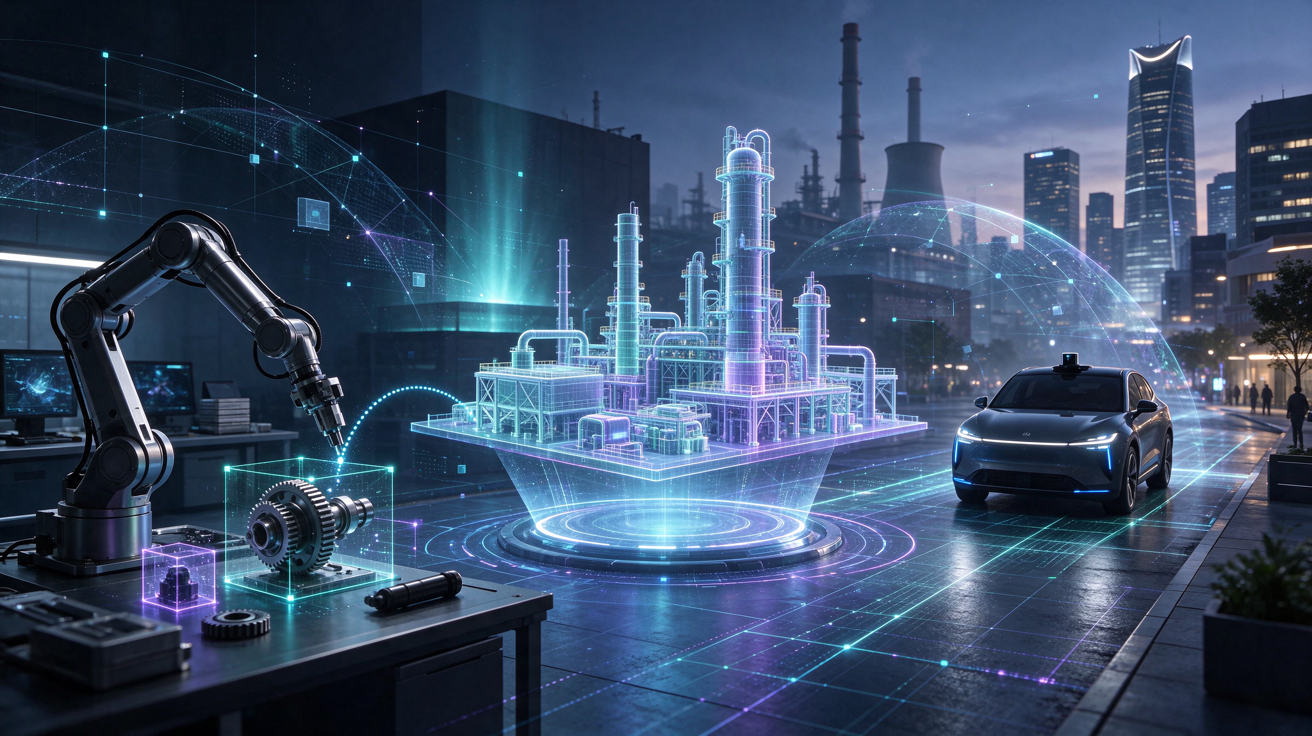
Robotics and Embodied AI
Robots operate in physical environments where objects can move, collide, deform, or behave unpredictably.
A robot must understand its surroundings and estimate the consequences of its actions before manipulating objects or navigating through a space.
World models may help robots:
- Predict the results of reaching, grasping, pushing, or moving objects.
- Evaluate alternative movement trajectories.
- Learn from simulated interaction rather than relying entirely on physical trials.
- Generate additional training scenarios.
- Adapt to unfamiliar objects and environments.
A particularly important research direction is the connection between world models and robot action policies. In this setting, a model does not simply generate a future image; it helps estimate which actions could produce a desired outcome.
Autonomous Driving
Autonomous driving involves continuous interaction with a changing environment.
Vehicles must account for road geometry, traffic signals, pedestrians, other vehicles, weather, and unexpected events.
Driving world models can help researchers create controllable scenarios, examine rare situations, and evaluate how an autonomous system responds to different conditions.
For example, a model may simulate a pedestrian entering a road, a vehicle suddenly changing lanes, or an unusual weather condition. Researchers can then study alternative driving decisions without needing to reproduce every scenario on a real road.
Gaming and Virtual Environments
Interactive world models may change how virtual environments are created.
Traditional game environments often depend on manually designed geometry, assets, physics systems, and scripted behavior. Generative world models investigate whether parts of this process can be learned and generated dynamically.
Potential research directions include:
- Environments generated from text or images.
- Continuous scene generation as a player moves.
- More responsive non-player characters.
- Dynamic environments that adapt to user actions.
- New forms of interactive storytelling.
These capabilities are still developing, and generated environments may not yet provide the deterministic behavior or detailed control required by conventional game engines.
Digital Twins and Industrial Simulation
A digital twin is a digital representation of a real-world asset, process, or environment.
World models may contribute to digital twins by improving prediction and simulation of changing conditions.
In industrial settings, this could involve modeling machinery, production lines, warehouses, or logistics environments.
Potential applications include testing operational changes, anticipating equipment behavior, studying safety scenarios, and evaluating different configurations before making physical changes.
Film, Animation, and Virtual Production
Generative world models may also support creative production.
Spatially consistent environments could help artists and production teams explore camera positions, generate scene variations, and develop virtual locations.
Interactive simulation may provide a more flexible way to preview environments and experiment with visual ideas.
However, production workflows still require precise artistic control, predictable outputs, and reliable continuity. These requirements are not automatically guaranteed by generative systems.
Scientific Research and Education
World models may provide new ways to study complex systems and visualize possible outcomes.
In education, simulated environments could help explain spatial relationships, physical processes, and dynamic events.
In scientific research, predictive models may support experimentation by generating hypotheses or estimating how a system could evolve under different conditions.
The reliability of these applications depends on whether the model's predictions are sufficiently accurate for the domain being studied.
Major Technical Challenges
Despite rapid progress, building reliable world models remains a difficult research problem.
A convincing demonstration in a short video or controlled environment does not necessarily indicate that a model can operate reliably across unfamiliar situations.
Long-Term Temporal Consistency
A world model needs to preserve important information as an environment evolves.
Objects should not randomly disappear, change identity, or move to inconsistent positions. Environments should remain coherent when a camera moves away and later returns.
Small prediction errors can accumulate over time, making long-horizon simulation difficult.
Physical Accuracy
Real-world behavior is governed by physical properties and interactions.
A model may produce visually plausible movement while failing to represent precise collision responses, friction, weight, deformation, or object contact.
This is particularly important for robotics, where small errors in predicted movement can lead to failed actions.
Spatial Understanding
Maintaining a coherent 3D representation is another major challenge.
A model may generate convincing individual views without accurately preserving the geometry of an environment across different viewpoints.
Reliable spatial understanding requires consistent object positions, dimensions, depth relationships, and scene structure.
Action Controllability
An interactive world model must respond appropriately to actions.
If an agent issues a movement command, the environment should change in a way that is consistent with that action.
The model must also distinguish between different possible actions and predict their different consequences.
Without reliable action conditioning, a generated environment may look interactive while offering limited control over its underlying dynamics.
Computational Requirements
Generating and simulating complex environments can require substantial computing resources.
High-resolution video, long interaction sequences, multiple camera views, and real-time responses all increase computational demands.
For practical deployment, models must balance prediction quality, latency, memory usage, and hardware requirements.
Data Quality and Coverage
World models learn from observations and interaction data.
If their training data lacks important physical situations, object types, environments, or rare events, their predictions may become unreliable when encountering unfamiliar conditions.
Collecting diverse real-world interaction data is expensive, especially for robotics and autonomous driving.
Evaluation and Benchmarking
There is no single metric that fully captures world-model capability.
Visual quality is useful for evaluating generated observations, but it cannot independently measure physical accuracy, action controllability, or planning usefulness.
Evaluation needs to consider several dimensions:
- Visual and spatial consistency.
- Temporal coherence.
- Physical plausibility.
- Accuracy of future-state prediction.
- Sensitivity to different actions.
- Performance over longer interaction sequences.
- Usefulness for real-world tasks.
The field therefore needs more robust benchmarks that measure not only what a model generates, but also how reliably it predicts and supports decisions.
The Future of AI World Models
World-model research is moving toward systems that combine perception, prediction, spatial reasoning, and action.
Several directions are likely to shape the next stage of development.
General-Purpose World Representations
Many current models are designed for specific environments or tasks.
Future research may investigate more general representations that can transfer across different settings, objects, and types of interaction.
The goal is to reduce the need to build a separate model for every environment or application.
Longer-Horizon Prediction and Memory
A useful world model should retain important information over extended periods.
This includes remembering object locations, tracking changes in an environment, and maintaining consistency across multiple actions.
Longer-term memory may help models support more complex tasks and multi-stage interactions.
Multimodal World Intelligence
Future world models may combine video, images, language, spatial data, audio, and action signals more closely.
This could help systems connect what they see with what they hear, what they understand, and what they can do.
Multimodal modeling may also make it easier to transfer knowledge between different environments and types of tasks.
Real-Time Interactive Simulation
Interactive simulation is an important direction for generative world models.
The objective is to create environments that respond continuously to movement, camera changes, and other actions while preserving coherent scene structure.
Improvements in generation speed, memory, and spatial consistency will be important for making these systems more useful.
Physical AI and Robotics
One of the most significant potential applications is physical AI.
Robots need to understand not only the appearance of objects, but also how objects respond to contact, force, and movement.
World models could provide a way to evaluate possible actions in an internal simulation before a robot executes them.
This may improve training efficiency and help systems adapt to unfamiliar situations.
Real-to-Virtual and Virtual-to-Real Systems
Another direction is the connection between real-world observations and simulated environments.
A model may reconstruct a real scene, create a corresponding virtual representation, and use that environment to test possible actions.
The long-term challenge is ensuring that knowledge learned in simulation transfers reliably to the physical world.
Agentic and Multi-Agent Environments
Many real environments contain multiple agents with different goals and behaviors.
Future world models may need to account for interactions between people, robots, vehicles, and other intelligent systems.
This introduces additional challenges involving behavior prediction, coordination, uncertainty, and complex multi-agent dynamics.
How to Evaluate the Progress of World Models
As the field develops, it is important to evaluate world models according to their actual capabilities rather than relying on visual demonstrations alone.
A useful evaluation framework should ask several questions.
| Evaluation dimension | Key question |
|---|---|
| Visual consistency | Does the generated environment remain visually coherent? |
| Spatial consistency | Are object positions and 3D relationships preserved? |
| Temporal consistency | Does the environment evolve without accumulating major errors? |
| Physical plausibility | Do objects behave in ways consistent with physical constraints? |
| Action controllability | Does the environment respond correctly to different actions? |
| Predictive accuracy | Can the model estimate future states reliably? |
| Planning usefulness | Do its predictions help an agent choose better actions? |
| Generalization | Does performance transfer to unfamiliar environments? |
| Efficiency | Can the model operate within practical latency and compute limits? |
These dimensions are related but not interchangeable.
For example, a model may generate visually impressive environments but struggle with physical interactions. Another model may produce less detailed visual output while providing useful predictions for robot planning.
The most meaningful progress will come from systems that demonstrate reliable performance across several dimensions and show measurable value in real tasks.
Toward a New Understanding of Intelligence
AI world models represent an important direction in the development of artificial intelligence.
They shift the focus from generating isolated outputs toward learning how environments are structured, how events unfold, and how actions can change the world.
The field includes many approaches: generative video simulation, latent prediction, 3D reconstruction, model-based reinforcement learning, and physical interaction modeling. Each contributes a different piece of the broader challenge.
There is still a significant gap between generating a convincing environment and building a reliable model of the physical world. Long-term consistency, accurate dynamics, spatial understanding, controllability, and real-world transfer remain open research problems.
As these technologies advance, world models may become an important foundation for robotics, autonomous systems, interactive environments, scientific simulation, and other forms of intelligent behavior.
SeedVerse explores this evolving frontier of artificial intelligence — the science, research, and ideas behind models that seek to understand and simulate the world.
Frequently Asked Questions About AI World Models
What is an AI world model?
An AI world model is a learned representation of an environment and its dynamics. It aims to predict how the environment may change and how different actions may affect future states.
How is a world model different from a video generation model?
A video generation model primarily produces visual sequences. A world model focuses more broadly on representing environmental structure and predicting how the environment evolves. Some world models use video generation as part of their approach, but visual generation alone does not establish reliable world understanding.
Are world models the same as 3D models?
No. A 3D model represents the geometry or appearance of an object or environment. A world model may also represent temporal changes, interactions, and possible future states. Some world models use 3D representations, while others rely on latent features or generated observations.
Can world models simulate physics?
Some world models are designed to predict physical interactions, such as movement, contact, and object manipulation. However, physical accuracy varies considerably across systems, and many models still struggle with complex dynamics.
What is an interactive world model?
An interactive world model is a system that attempts to maintain and update an environment in response to actions or changes introduced during a simulation. This may include movement, camera control, object interactions, or natural-language instructions.
What are world models used for?
Potential applications include robotics, autonomous driving, virtual environments, gaming, digital twins, industrial simulation, synthetic data generation, and scientific research.
Which companies are developing world models?
Research and development efforts include Google DeepMind, NVIDIA, Meta, World Labs, Tencent, Runway, Wayve, and other organizations working on generative simulation, spatial intelligence, predictive modeling, and physical AI.
Are world models open source?
Some projects release model weights, code, datasets, or research papers, while others are available through research previews or commercial platforms. Availability and licensing vary by project and version.
Can world models help robots learn new tasks?
Potentially. A world model can help a robot predict the consequences of actions, compare possible outcomes, and learn from simulated interactions. Research into predictive world models and robot planning explores this direction, but general-purpose robotic capability remains an open challenge.
What is the future of world models?
Future research is likely to focus on longer-term consistency, more accurate physical prediction, multimodal understanding, real-time interaction, better action control, and improved transfer between simulated and physical environments.